
Quick Answer
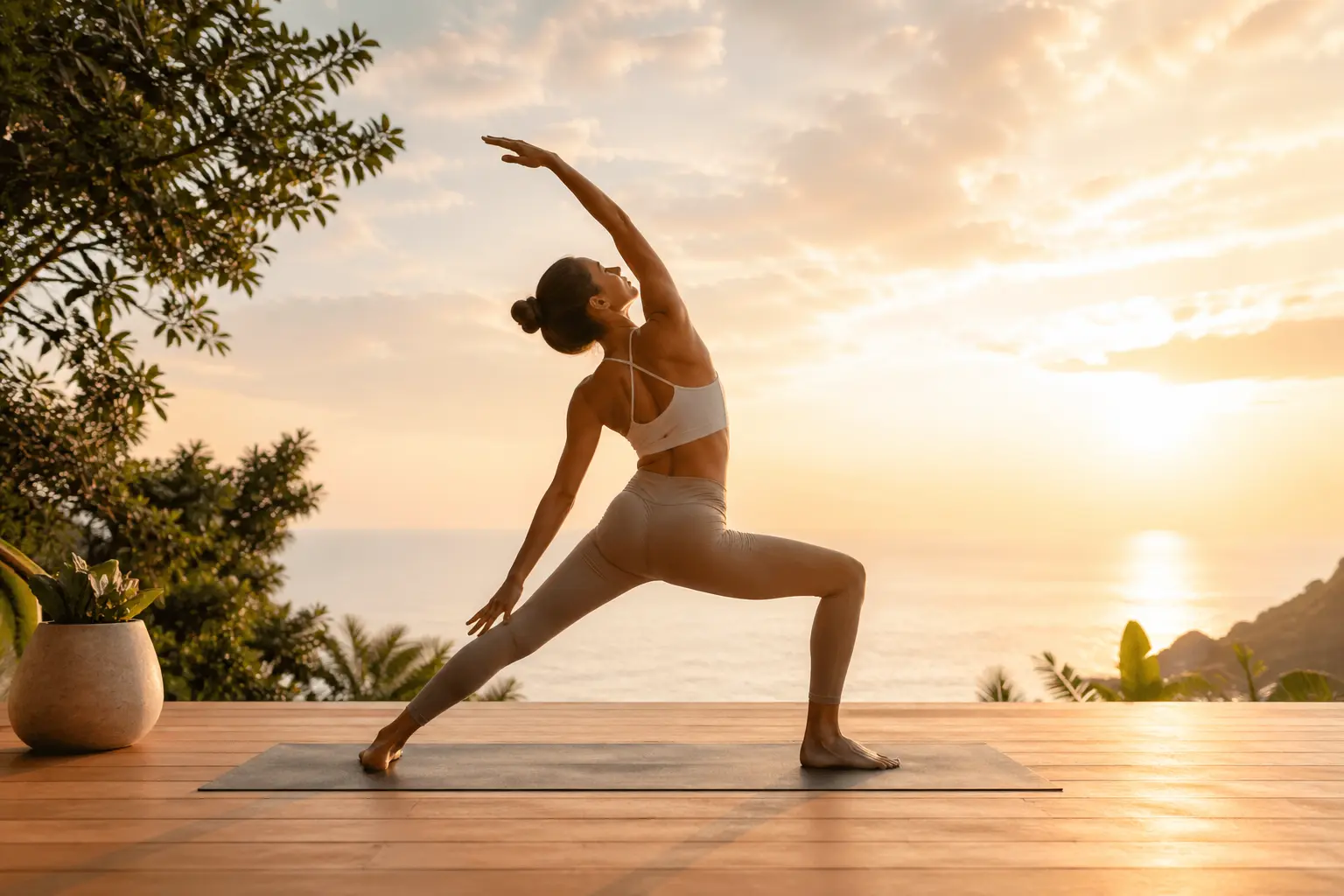
Flow in Yoga refers to the smooth, continuous movement between poses, often guided by breath. It creates a rhythm where each movement connects naturally to the next, helping you stay focused, relaxed, and fully present during your practice.
Introduction
Yoga is not just about holding poses. If you’ve ever joined a yoga class or watched a session online, you might have noticed how some practices feel like a calm, steady dance. That smooth connection between movements is what we call “flow.” For beginners, the idea of flow in yoga can feel confusing. Is it about speed? Is it about flexibility? Or is it something deeper?
Let’s break it down in a simple and practical way so you can actually understand and experience it.
What Is Flow in Yoga?
Flow in Yoga means moving from one pose to another without stopping abruptly. Each movement is linked with your breathing, creating a natural rhythm. Instead of thinking, “Now I go to the next pose,” your body transitions smoothly, almost automatically. It feels less like exercise and more like a continuous experience.
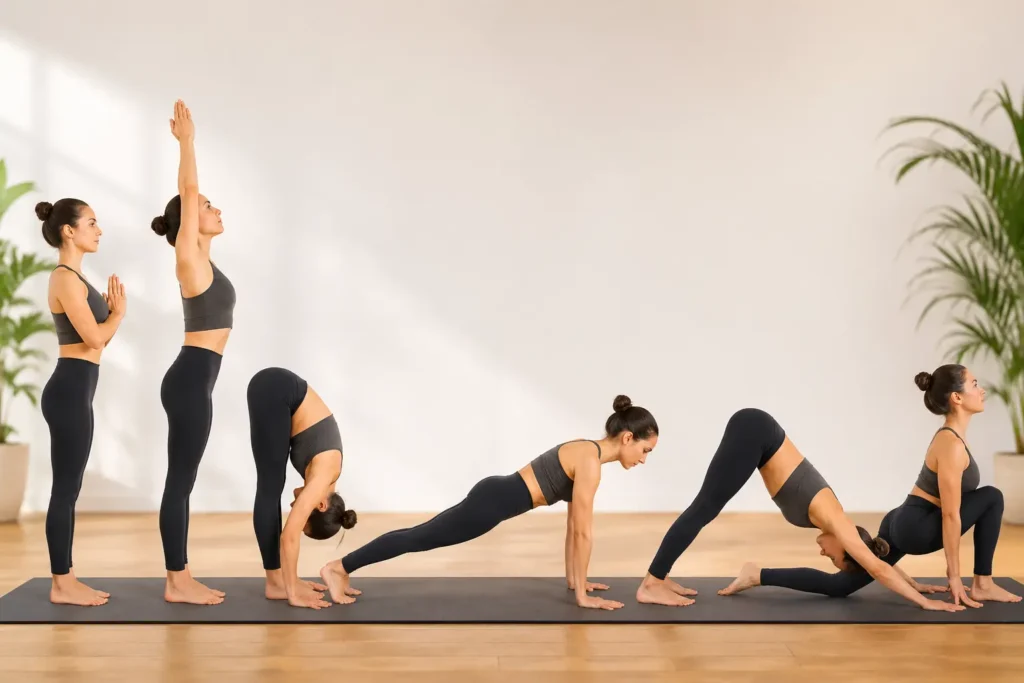
In many styles like Vinyasa yoga, flow is the core concept. You inhale, you move. You exhale, you shift again. This creates a steady pace that keeps your mind engaged and your body active. Flow is not about doing things fast. It’s about moving with awareness.
Why Flow Is Important in Yoga Practice
Flow changes how yoga feels. Without flow, yoga can feel like a list of poses. With flow, it becomes a complete experience.
Here’s why it matters:
- It improves focus by keeping your mind engaged
- It connects your breath with movement
- It builds strength and flexibility together
- It reduces mental stress
- It makes your practice feel more natural and less forced
When you start to flow, you stop overthinking every movement. Your body and breath begin to work together.
How Breath Creates Flow
Breathing is the foundation of flow in yoga. Each movement is linked to either an inhale or an exhale. This connection is what turns simple movements into a flowing sequence.
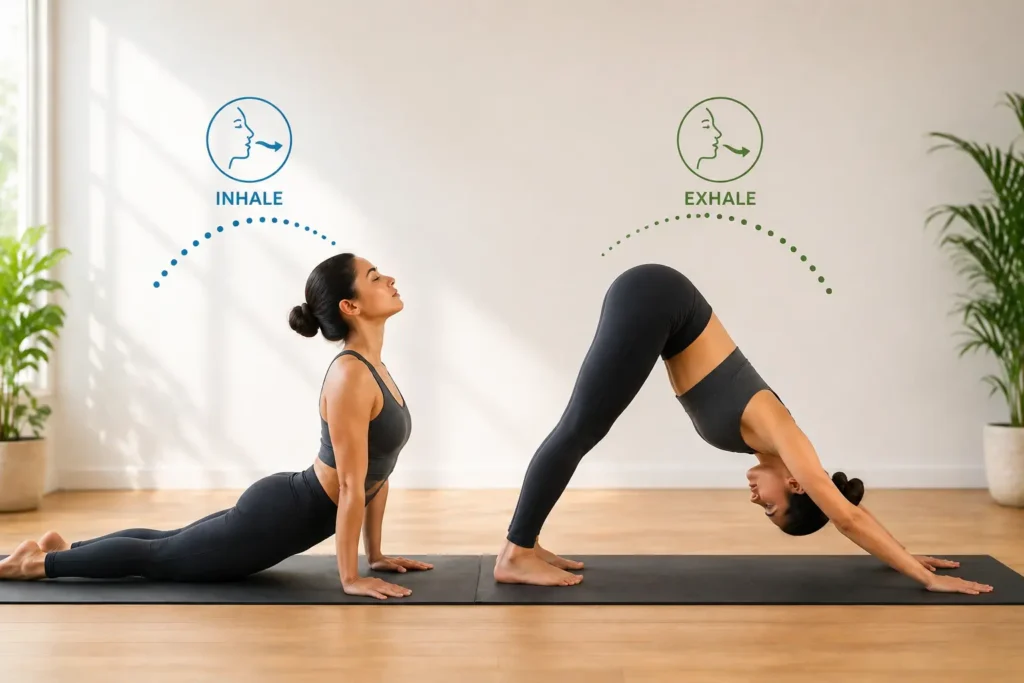
For example:
- Inhale → lift your arms
- Exhale → fold forward
- Inhale → lengthen your spine
- Exhale → step back
This pattern creates a rhythm. When your breath becomes steady, your movements automatically follow. If your breath is rushed or uneven, your flow breaks. That’s why yoga teachers often remind you to “focus on your breath.”
Flow vs Holding Poses: What’s the Difference?
Many beginners think yoga is just about holding poses for a long time. That’s only one part of it.
In some styles like Hatha yoga, you hold poses longer. In flow-based styles, you move continuously.
Here’s the difference in simple terms:
- Holding poses → builds stability and awareness
- Flowing sequences → build rhythm, coordination, and endurance
Both are useful. But flow adds a dynamic element that makes yoga feel more alive.
Types of Yoga That Use Flow
Not all yoga styles focus on flow. Some are slow and still, while others are more dynamic.
Here are a few styles where flow is central:
Vinyasa Yoga
This is the most common “flow yoga.” Movements are linked with breath, and sequences can vary in every class.
Power Yoga
A stronger and faster version of flow yoga. It builds strength and stamina.
Ashtanga Yoga
A fixed sequence where you move in a structured flow pattern.
If you’re looking to understand flow deeply, Vinyasa yoga is usually the best place to start.
How to Experience Flow as a Beginner
Flow doesn’t come instantly. At first, you may feel confused or out of sync. That’s normal.
Here’s how you can start developing it:
1. Focus on Your Breath First
Don’t worry about perfect poses. Just match your breathing with your movement.
2. Slow Down
Flow is not about speed. Moving too fast actually breaks the rhythm.
3. Repeat Simple Sequences
Start with basic flows like Sun Salutation. Repetition helps your body learn the pattern.
4. Stay Present
Instead of thinking about the next pose, stay with the current movement.
5. Accept Imperfection
You don’t need to look perfect. Flow is about feeling, not appearance. With time, your body will start to move more naturally.
Common Mistakes That Break Flow
Many people struggle with flow because of small mistakes.
Here are a few common ones:
- Holding your breath during movement
- Rushing through poses
- Overthinking every step
- Focusing only on flexibility
- Comparing yourself to others
Flow happens when you relax into the practice, not when you force it.
Mental Benefits of Flow in Yoga
Flow is not just physical. It has a strong effect on your mind. When you move continuously with your breath, your mind becomes quieter. You stop jumping between thoughts. This state is often called being “in the zone.” It’s similar to what athletes or artists feel when they are fully focused.
Some mental benefits include:
- Reduced anxiety
- Better concentration
- Improved mood
- A sense of calm and clarity
This is why many people prefer flow yoga for stress relief.
Physical Benefits of Flow Yoga
Flow also works your body in a balanced way. Because you are moving continuously, your muscles stay engaged longer. This builds both strength and flexibility.
Some physical benefits include:
- Better muscle coordination
- Improved balance
- Increased stamina
- Stronger core
- Enhanced mobility
Unlike static workouts, flow keeps your whole body active.
How Flow Feels When You Get It Right
At some point, everything clicks. Your breathing becomes smooth. Your movements feel effortless. You don’t have to think about what comes next. It feels like your body is guiding itself.
Time may even feel slower or faster. You become fully present in the moment. This is the real experience of flow in yoga.
Is Flow in Yoga Only for Advanced Practitioners?
Not at all. Flow is not about being advanced. It’s about awareness and consistency. Even beginners can experience flow in simple sequences. You don’t need complex poses. In fact, starting simple is the best way to learn it. Advanced practitioners may have smoother transitions, but the core idea remains the same.
How to Build a Simple Yoga Flow Routine
If you want to practice at home, start small.
Here’s a basic flow you can try:
- Mountain Pose
- Forward Fold
- Half Lift
- Plank
- Downward Dog
- Step forward
- Stand up
Link each movement with your breath. Practice slowly at first. Over time, your transitions will become smoother.
Conclusion
Flow in yoga is the connection between movement and breath that creates a smooth, continuous practice. It turns yoga from a set of poses into a mindful experience. You don’t need to be flexible or advanced to feel it. You just need to slow down, focus on your breathing, and stay present. With regular practice, flow becomes natural. And once you experience it, yoga feels completely different.
About the Author
Muhammad Hammad Abbas is a specialized content writer who turns complex ideas into clear, helpful guides. He focuses on mindfulness, wellness, and practical habits for readers worldwide. His work in-depth research with lived practice so you get advice you can trust and use today.